
Is the Emsella Chair Right for You? A Review of Non-Invasive Incontinence Treatment
Tired of bladder leakage? Read our deep dive into Emsella technology, how the "Kegel Throne" works, and if it's the right choice for your pelvic floor health at Zabinski Urology in Melbourne, FL.
What Is the Emsella Chair?
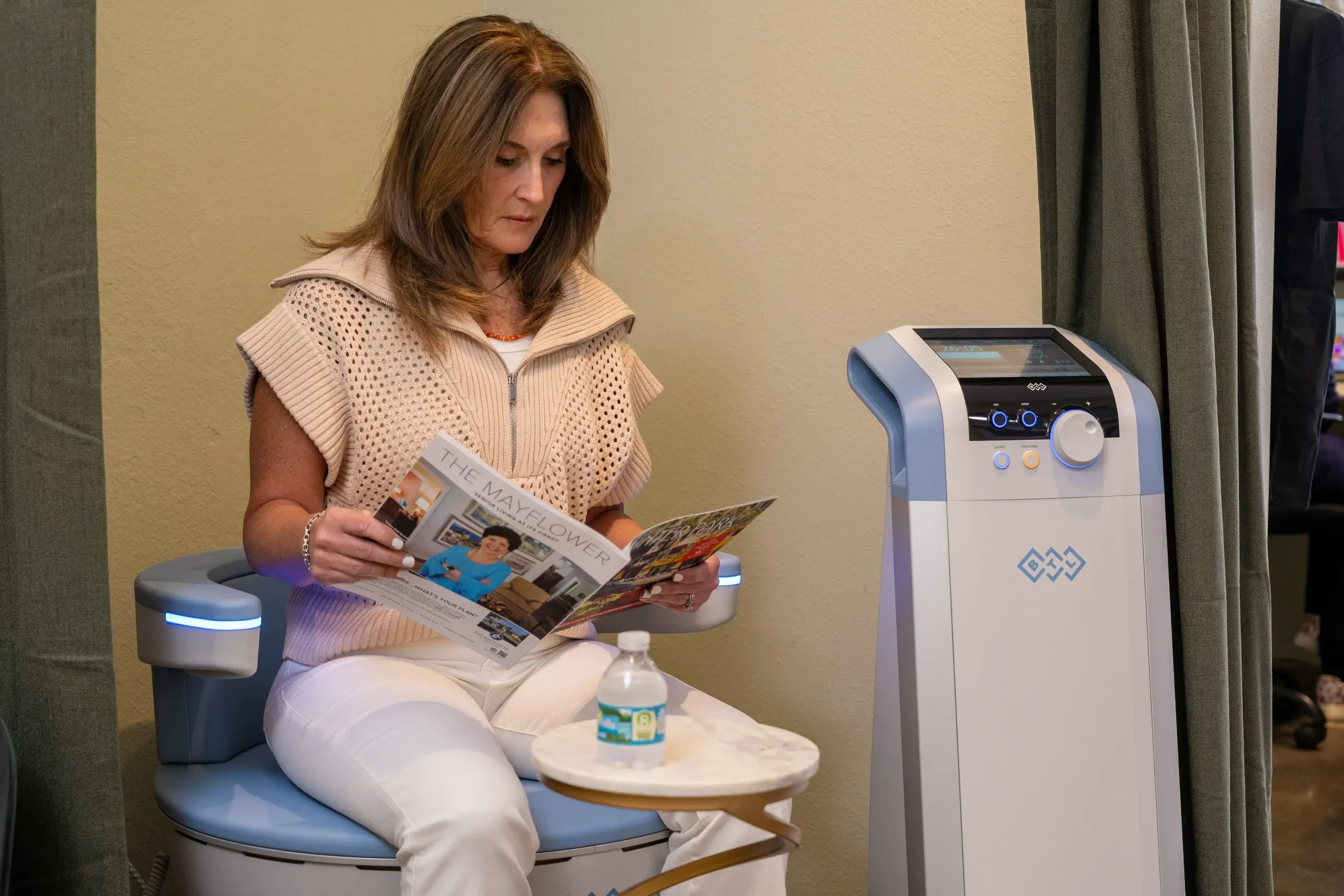
If you have been researching non-surgical options for bladder leakage or pelvic floor weakness, you have likely come across the Emsella chair - sometimes referred to as the "Kegel Throne." At Zabinski Urology in Melbourne, FL, we offer Emsella as part of our comprehensive approach to urinary incontinence treatment.
The BTL Emsella is an FDA-cleared device that uses High-Intensity Focused Electromagnetic (HIFEM) technology to stimulate deep pelvic floor muscle contractions. During a single 28-minute session, the device delivers approximately 11,200 supramaximal pelvic floor muscle contractions - the equivalent of performing thousands of Kegel exercises, but at an intensity impossible to achieve voluntarily.
How Does Emsella Work?
The technology behind Emsella is straightforward yet powerful:
- Electromagnetic pulses: The chair generates a focused electromagnetic field that penetrates the pelvic floor muscles
- Supramaximal contractions: These electromagnetic pulses trigger involuntary muscle contractions far stronger than voluntary Kegels
- Muscle remodeling: Over a series of treatments, these intense contractions strengthen and retrain the pelvic floor muscles, improving their ability to support the bladder and control urination
- Neuromuscular control: The treatment also helps restore the neuromuscular connection that governs bladder control
The Treatment Experience
One of the most appealing aspects of Emsella is how simple each session is:
- You remain fully clothed throughout the treatment
- You simply sit on the Emsella chair for 28 minutes
- You may feel tingling and pelvic floor muscle contractions - most patients describe this as unusual but not painful
- There is no downtime - you can return to all normal activities immediately
- No preparation or post-treatment restrictions are required
Who Is a Good Candidate for Emsella?
Emsella can benefit a wide range of patients dealing with pelvic floor weakness and urinary incontinence. Ideal candidates include:
- Women experiencing stress incontinence (leakage during coughing, sneezing, laughing, or exercise)
- Men and women with urge incontinence (sudden, intense need to urinate)
- Postpartum women with weakened pelvic floor muscles
- Men experiencing incontinence after prostate surgery
- Patients who have tried Kegel exercises without adequate improvement
- Anyone seeking a non-invasive first-line treatment before considering surgery
Who Should Not Use Emsella?
Emsella is not appropriate for everyone. Contraindications include:
- Patients with cardiac pacemakers or implanted defibrillators
- Patients with metal implants in the pelvic area (hip replacements, metal screws)
- Patients with copper IUDs (hormonal IUDs without metal components may be acceptable - discuss with your provider)
- Pregnant women
- Patients with active urinary tract infections (treatment should be deferred until resolved)
At Zabinski Urology, our urologists will evaluate your specific situation during a consultation to determine if Emsella is appropriate for you. In many cases, urodynamic testing may be recommended first to fully characterize your bladder function.
What Does the Research Say?
Clinical studies on HIFEM technology for pelvic floor rehabilitation have shown promising results:
- A 2019 study published in Lasers in Surgery and Medicine found that 95% of treated patients reported significant improvement in quality of life
- Research presented at the International Continence Society showed a 75% reduction in pad usage among Emsella patients
- Multiple studies demonstrate sustained improvement at 6-month and 12-month follow-ups
While results vary between individuals, the overall body of evidence supports HIFEM as an effective non-invasive option for mild to moderate urinary incontinence.
Emsella vs. Other Incontinence Treatments
Understanding how Emsella compares to other treatment options can help you make an informed decision:
| Treatment | Invasiveness | Sessions | Downtime | Best For |
|---|---|---|---|---|
| Emsella | Non-invasive | 6 sessions (2x/week) | None | Mild to moderate stress/urge incontinence |
| Kegel Exercises | Non-invasive | Daily (ongoing) | None | Mild symptoms, prevention |
| Biofeedback Therapy | Minimally invasive | 6-12 sessions | None | Patients who struggle with proper Kegel form |
| Surgical Sling | Surgical | One procedure | 2-6 weeks | Moderate to severe stress incontinence |
What to Expect: Treatment Protocol
A typical Emsella treatment plan at Zabinski Urology includes:
- Initial consultation: Evaluation of your symptoms, medical history, and candidacy
- Treatment course: 6 sessions scheduled twice per week over 3 weeks
- Each session: 28 minutes seated on the Emsella chair
- Results timeline: Some patients notice improvement after the first few sessions; optimal results typically develop over the weeks following the treatment course
- Maintenance: Some patients benefit from periodic maintenance sessions every 3-6 months
Cost and Insurance
Emsella is generally considered an elective procedure, and most insurance plans do not currently cover it. At Zabinski Urology, individual session pricing typically ranges from $250 to $500, with package pricing available for the recommended 6-session course.
We believe in transparent pricing and will provide a detailed cost breakdown during your consultation. For patients who benefit from Emsella, the investment often compares favorably to the ongoing costs of incontinence pads, medications, and the impact on quality of life.
Frequently Asked Questions
How soon will I see results?
Many patients notice some improvement after 2-3 sessions. The most significant results are typically seen 2-4 weeks after completing the full 6-session course, as the pelvic floor muscles continue to strengthen.
Is Emsella painful?
Most patients describe the sensation as tingling and involuntary muscle contractions. The intensity is adjustable. While the sensation is unusual, patients rarely describe it as painful.
Can men use Emsella?
Yes. While often marketed primarily to women, Emsella is effective for men experiencing urinary incontinence, particularly after prostate surgery. The pelvic floor muscles function similarly in both sexes.
How long do results last?
Clinical studies show sustained improvement at 6-12 months post-treatment. Maintenance sessions every few months can help preserve results long-term. Individual results vary based on the underlying cause and severity of incontinence.
Take the Next Step
If bladder leakage is affecting your daily life, confidence, or activity level, Emsella may offer the relief you have been looking for - without surgery, without downtime, and without disrupting your routine.
Contact Zabinski Urology at (321) 372-1372 to schedule your Emsella consultation at our Melbourne, FL office. Our urologists serve patients from Melbourne, Palm Bay, Viera, Rockledge, Cocoa Beach, and throughout the Space Coast.
You can also learn more about the bladder conditions we treat and our full range of diagnostic services for urinary concerns.