Check-In
Your urologist reviews your symptoms, medications, and recent voiding history with you.

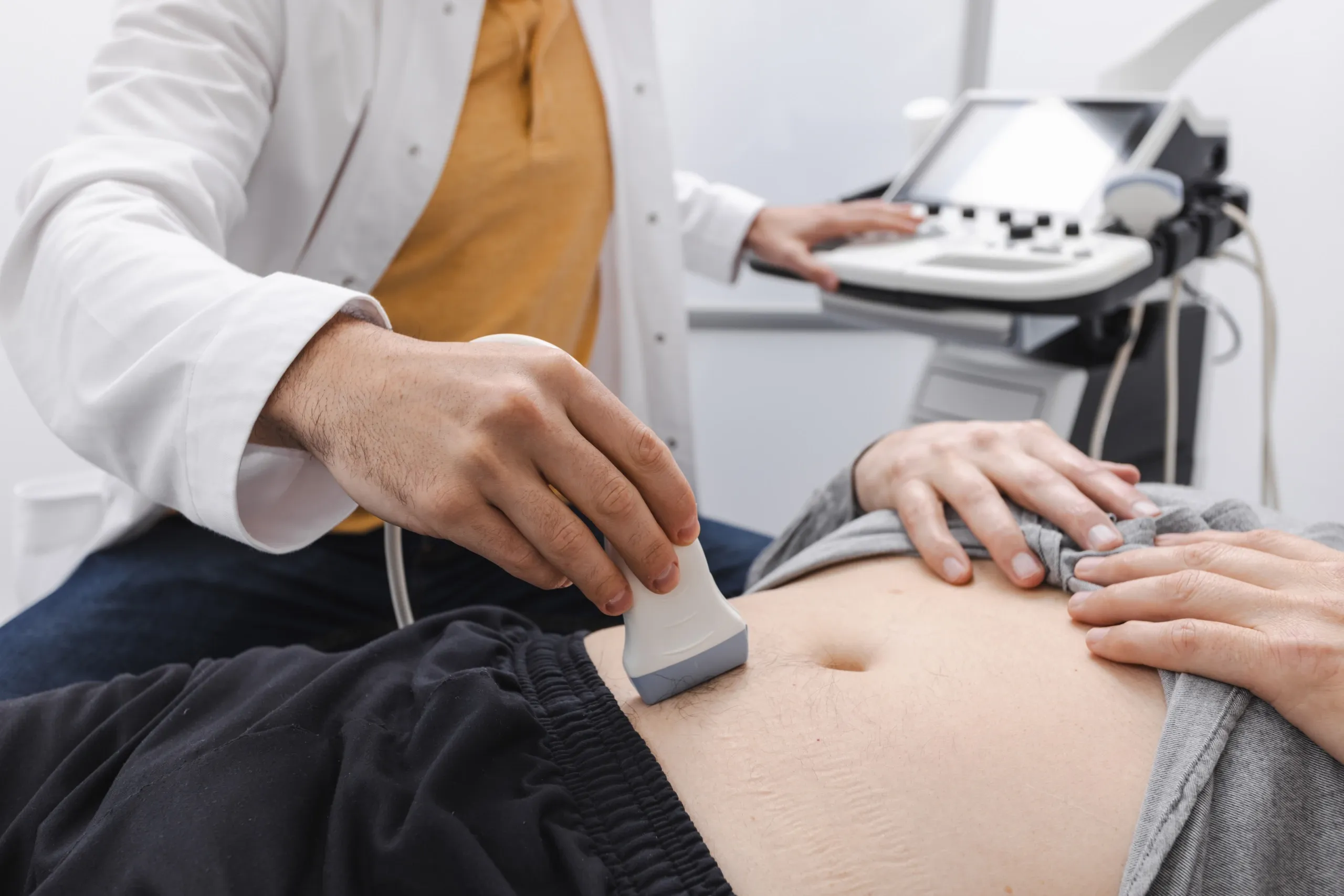
Non-Invasive Bladder Ultrasound at Zabinski Urology
A Simple Test That Guides Smarter Treatment Decisions
A bladder scan uses high-frequency sound waves to create a real-time image of the bladder and calculate how much urine it holds. The most common use is measuring post-void residual, the amount of urine left after you try to empty your bladder. When too much urine stays behind, it can cause urgency, frequency, infections, incomplete emptying, and pressure on the kidneys. A quick scan tells us exactly how the bladder is functioning right now.
The test takes only minutes, requires no preparation, and produces results we can review immediately with you in the exam room.
Because the scan is non-invasive, it is ideal for patients of all ages, including those who are anxious about catheterization or who have had repeated urinary tract infections. The results help our urologists decide whether further testing such as cystoscopy or urodynamic testing is needed, or whether a simple change in medication or behavior will solve the problem.
Bladder scanning also lets us monitor treatment progress for conditions like overactive bladder, enlarged prostate, and urinary retention over time.
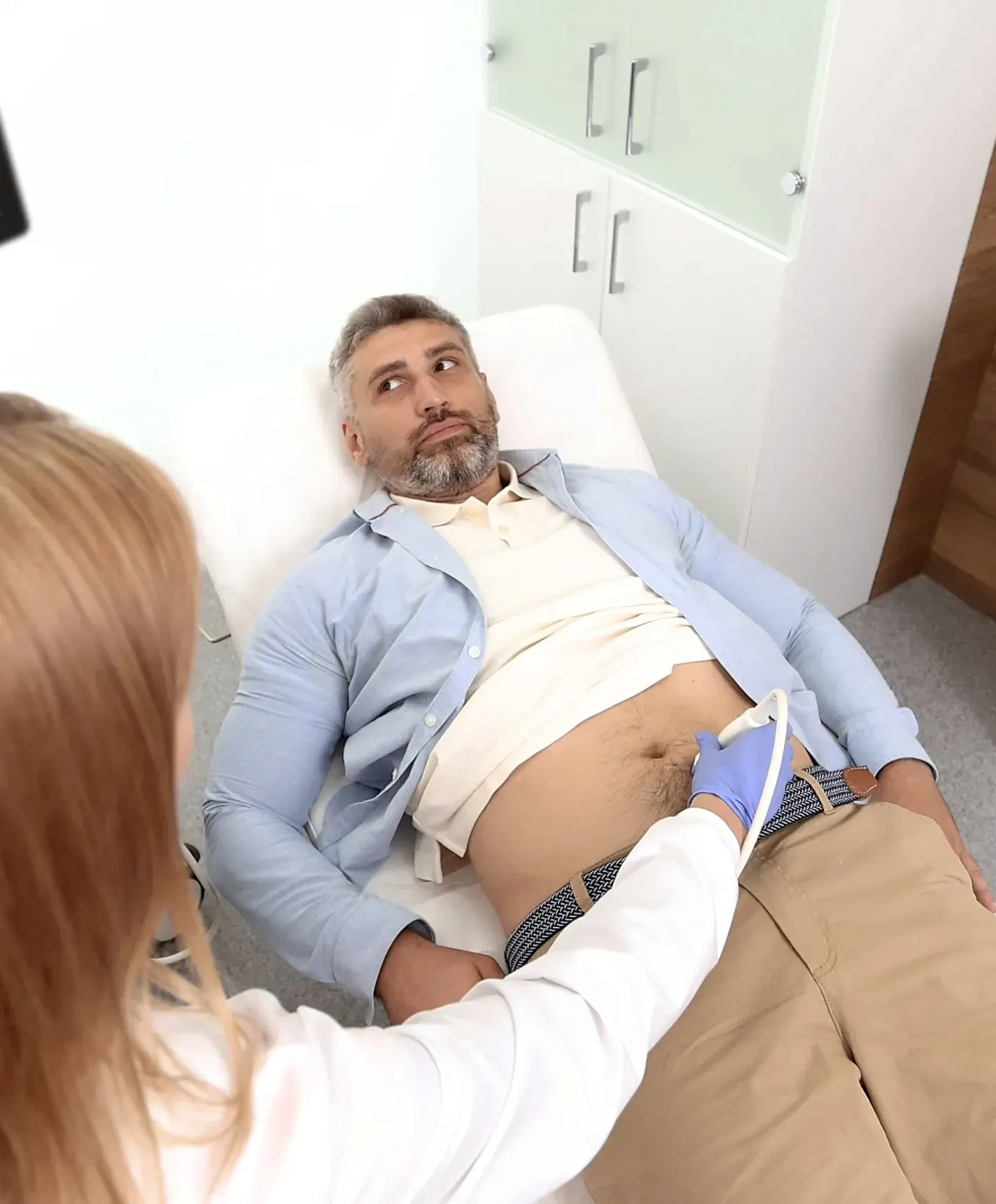
Portable Ultrasound for Real-Time Bladder Measurement
A bladder scan is a portable diagnostic ultrasound that measures the volume of urine inside the bladder. Unlike standard radiology ultrasound, the device is small, handheld, and used at the bedside or in the office. It is recognized as a safe, accurate, and FDA-cleared method for evaluating bladder function (FDA).
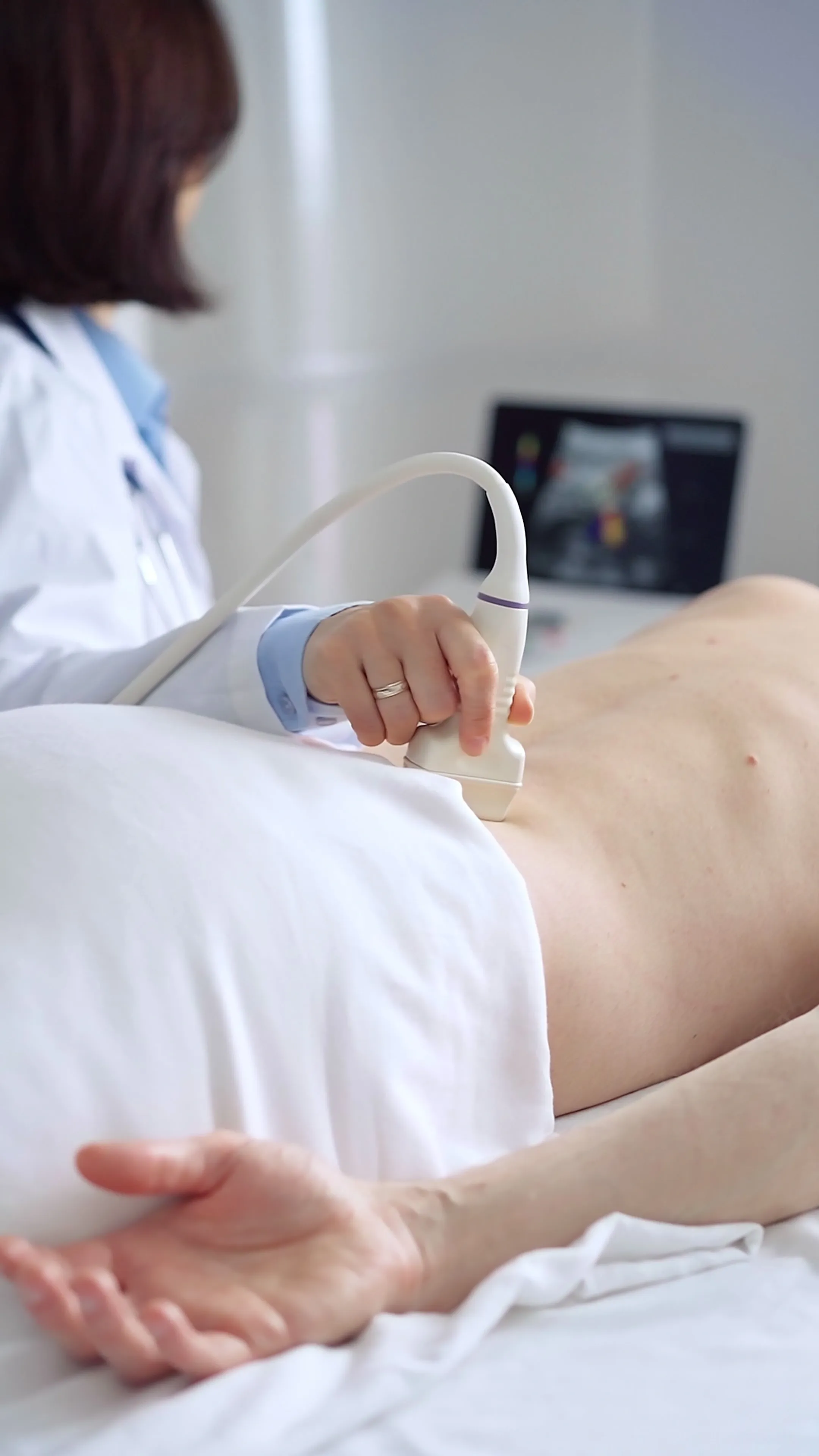
During the scan, your urologist applies a small amount of warm gel to your lower abdomen, then gently glides the ultrasound probe over the area just above the pubic bone. The device sends harmless sound waves through the skin, captures echoes from the bladder wall, and instantly calculates urine volume in milliliters. The most clinically valuable measurement is the post-void residual, taken immediately after you attempt to empty your bladder. A small residual (typically less than 50 mL) is normal, while larger volumes suggest the bladder is not emptying efficiently and may need further evaluation.
If your symptoms suggest a bladder or outflow problem, a brief consultation with our team usually starts with a bladder scan to establish a baseline before any treatment decision is made.
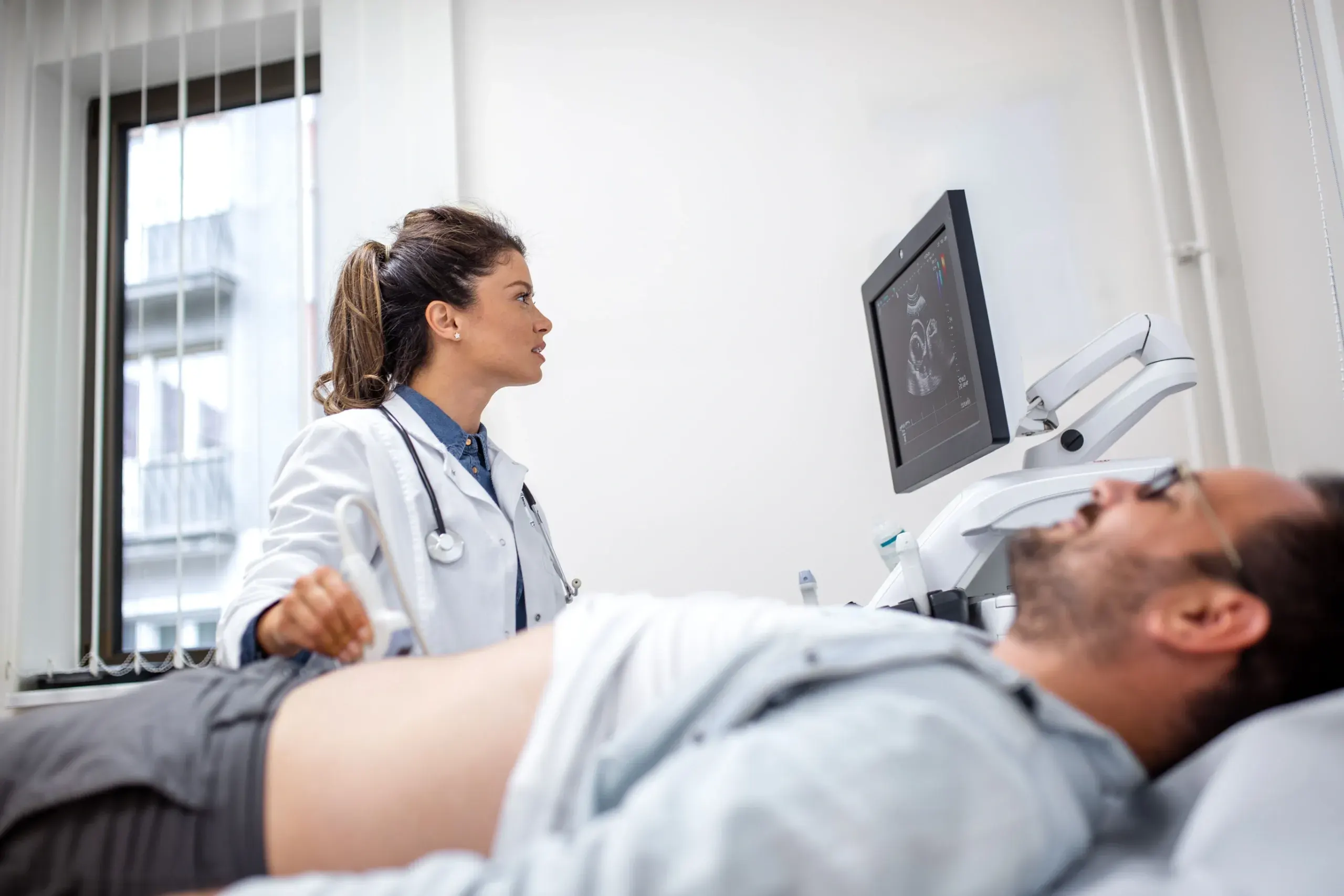
Painless, Fast, and Highly Informative
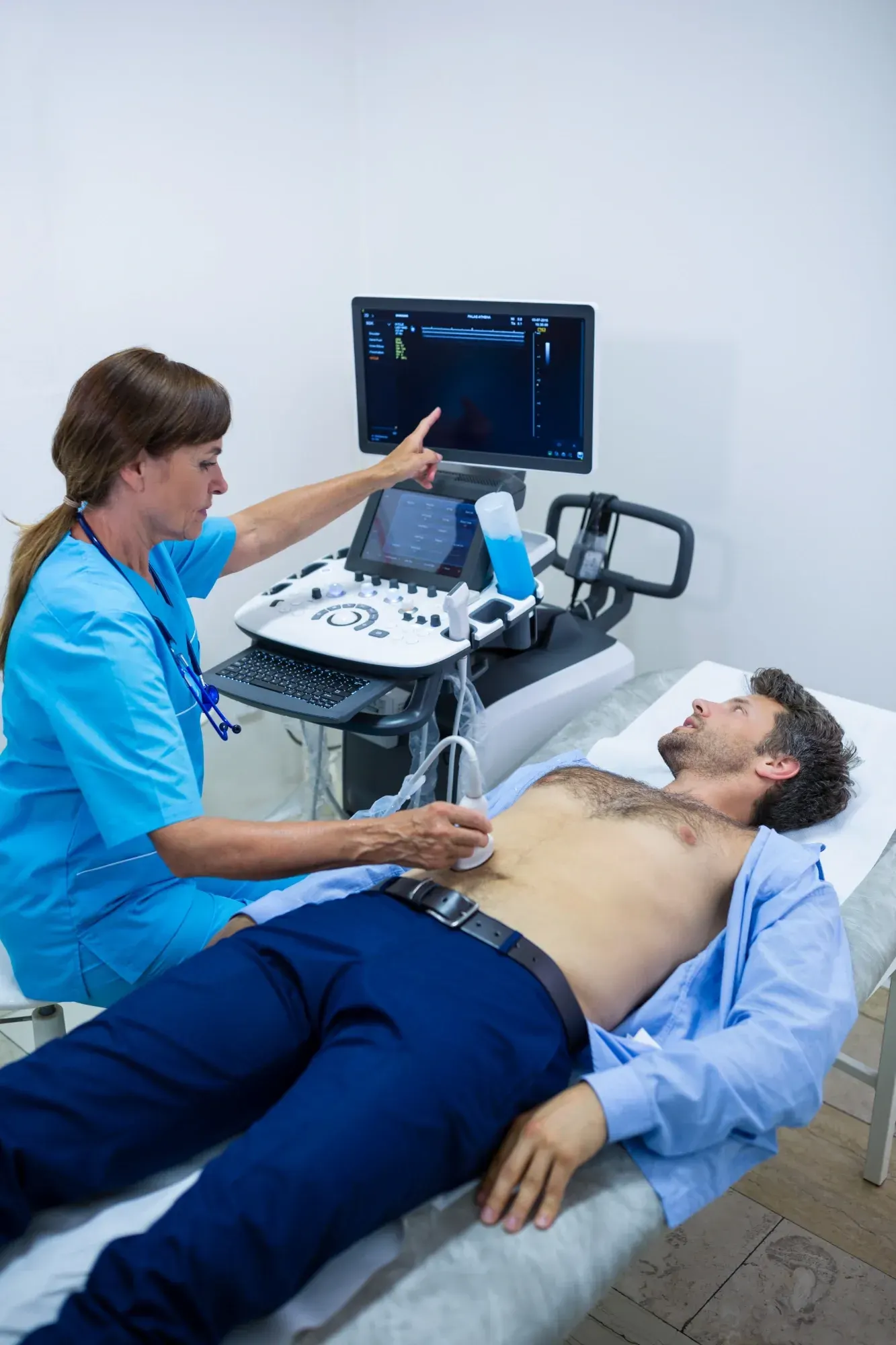
Uses gentle ultrasound, no catheter, no needles, and zero radiation exposure.
Volume and post-void residual readings appear within seconds of the scan.
Most patients feel only the warm gel and light pressure of the probe.
Helps avoid catheterization that historically was used to measure residual urine.
Gives our urologists objective data to guide medication, therapy, or further testing.
Suitable for adults and older patients with sensitive urinary symptoms or anxiety.
Compare How Your Bladder Can Be Assessed
| Procedure | Invasiveness | Procedure Time | Discomfort | Anesthesia | Results Timeline | Best For |
|---|---|---|---|---|---|---|
| Bladder Scan | None, external ultrasound | Under 5 minutes | None | None | Immediate in office | Quick volume and post-void residual measurement |
| Catheterization | Invasive, urethral catheter | 5-10 minutes | Mild to moderate | Topical, optional | Immediate | When precise drainage and a urine sample are both needed |
| Urodynamic Testing | Mildly invasive, catheter-based | 30-60 minutes | Mild | None | Same visit interpretation | Detailed pressure and flow study for complex symptoms |

Patients Whose Symptoms Need Objective Measurement
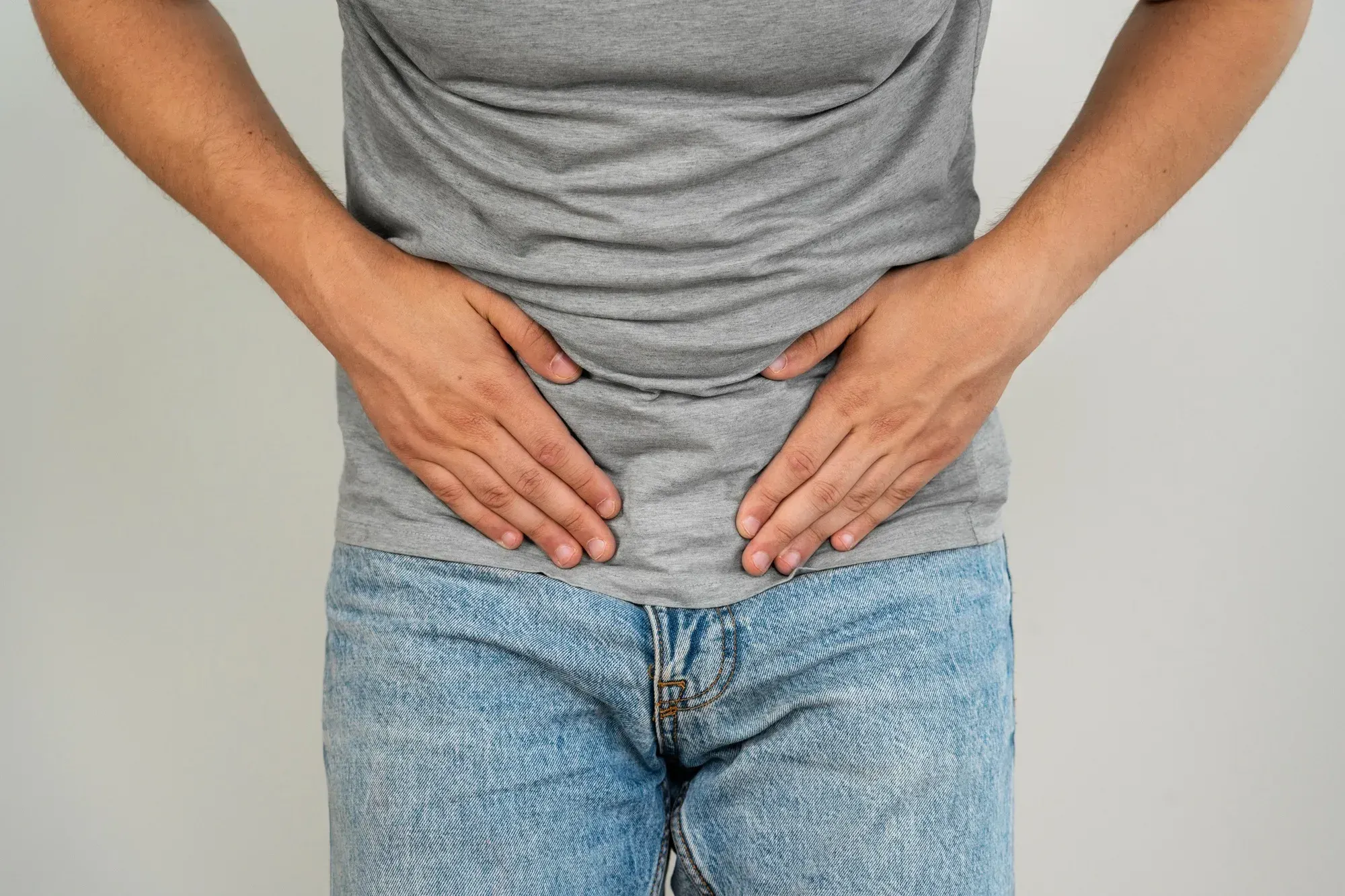
A bladder scan is appropriate for almost any patient with lower urinary tract symptoms. Because it is non-invasive and risk-free, our urologists routinely use it during the initial visit to gather objective information before recommending treatment. The American Urological Association supports bladder ultrasound as a first-line tool for evaluating bladder emptying (AUA).
If you are unsure whether a bladder scan is the right starting point, schedule a consultation with our urologists to review your symptoms and the safest evaluation plan.
Your urologist reviews your symptoms, medications, and recent voiding history with you.
You attempt to empty your bladder normally, then return to the exam table for the post-void measurement.
Your urologist applies a small amount of warm gel and glides the handheld ultrasound probe across your lower abdomen.
Volume and post-void residual readings appear on the device screen and are reviewed with you immediately.
Your urologist explains what the numbers mean and recommends treatment, monitoring, or follow-up testing.
Risks and Considerations
Bladder scanning is one of the safest diagnostic procedures in urology. The handheld device uses the same harmless sound-wave technology relied on for prenatal ultrasound, and it has no known biological side effects when used appropriately. According to the National Institutes of Health, diagnostic ultrasound has an excellent safety record across decades of clinical use (NIH).
Because the scan is entirely external, patients do not experience pain, bleeding, or risk of infection. There is no radiation, no contrast dye, and no catheter. The most common sensation is the warmth of the ultrasound gel and gentle pressure from the probe.
Accuracy can be slightly reduced in patients with significant abdominal scarring, obesity, ascites, or in pregnant patients where the uterus alters bladder position. In those cases, our urologists may recommend an alternative or supplemental test for a complete evaluation.
Because no anesthesia or sedation is involved, there are no restrictions on eating, driving, or returning to work afterward. Patients can pursue bladder scanning as often as needed to monitor treatment response over time.
Bladder scans are typically performed as part of a urology office visit when there is a medical reason such as urinary frequency, retention, recurrent UTIs, or post-operative monitoring. In those situations, the scan is generally covered by most major insurance plans, Medicare, and Medicare Advantage policies as a diagnostic procedure.
Because each insurance plan handles diagnostic ultrasound differently, our front-desk team verifies your benefits before your visit and explains any expected copay, deductible, or coinsurance. For self-pay patients, we provide a clear, up-front estimate.
If you have questions about coverage, scheduling, or self-pay rates, please contact our Melbourne office and our team will walk through the details with you.

Two Generations of Trusted Urologic Care
Father-son urology team trusted across Melbourne and the Space Coast.
Your urologist reviews scan results with you immediately, never weeks later.
Quiet rooms and unhurried visits for sensitive urinary concerns.
Scans connect seamlessly to cystoscopy, urodynamics, and long-term care plans.
Explore other urology services offered at Zabinski Urology in Melbourne, FL.

Precise evaluation with advanced urologic diagnostic tools

Non-invasive options for pelvic floor and bladder wellness

Hormone optimization and reproductive evaluations for men
Answers to the Questions Patients Ask Most
No. A bladder scan is completely non-invasive and painless. You will feel only the warmth of the ultrasound gel and light pressure from the handheld probe as your urologist glides it across your lower abdomen for a few seconds.
Usually no preparation is needed. For a post-void residual measurement, your urologist will simply ask you to empty your bladder normally before the scan. If a full-bladder measurement is needed, our team will tell you in advance whether to arrive with a comfortably full bladder.
The scan itself takes under five minutes. Most of the visit is spent reviewing your symptoms, voiding history, and the results with your urologist so you leave with a clear plan.
Diagnostic ultrasound is considered very safe and is used in pregnancy care. However, in later trimesters the uterus can shift the bladder and affect accuracy. Always let our team know if you are or might be pregnant so we can choose the best test for you.
Post-void residual is the amount of urine left in your bladder after you try to empty it. A small residual is normal. Larger amounts can indicate that the bladder is not emptying efficiently, which is helpful information for diagnosing overactive bladder, urinary retention, and prostate issues.
Yes. The volume measurement appears on the device screen within seconds. Your urologist will discuss the reading with you immediately, explain what it means, and outline next steps before you leave the office.
Because the test is non-invasive and radiation-free, it can be repeated as often as needed. We routinely use bladder scanning to monitor treatment response for patients on bladder medications or recovering from prostate or pelvic procedures.